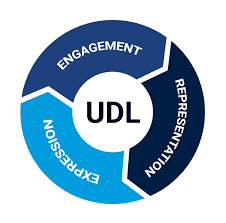
Post 3 – Universal Design in Engineering and the Universal Design for Learning
When thinking of examples of universal design in engineering, automatic sliding doors immediately come to mind. They were originally installed to improve accessibility for individuals using wheelchairs or mobility aids. However, today they benefit almost everyone. Whether that be people carrying groceries, pushing strollers, travelling with luggage, or even just having their hands full. The key feature is that the user does not have to ask for help or exert extra effort; the environment adjusts automatically.
In my eyes, there is a strong parallel between automatic doors and Universal Design for Learning (UDL). In many learning environments, students have to “push” against the door, meaning they must request accommodations, seek clarification, or work around rigid formats that do not fit how they learn best. That places responsibility on the learner. Automatic doors, on the other hand, remove that initial barrier before it becomes a problem.
Applying this to learning designs suggests that flexibility should be built into the course from the beginning. For example, when taking midterms and exams at UVIC, some professors will provide universal time on exams. Usually, exams are designed to be completed within a certain time, but all students are given additional time. This allows students who require time adjustments to be granted them without registering for CAL. Additionally, it relieves some pressure off all students who have trouble with time limits on exams.
What stands out is that automatic doors do not lower expectations. They still lead to the same building, but they simply make entry smoother. Universal Design for Learning works similarly. It keeps high standards in place while reducing unnecessary barriers that can limit participation. The goal is not to make learning easier, but to build access into the design from the start. When accessibility is planned early on, fewer learners are positioned as needing special adjustments to take part. Flexibility becomes a normal part of the structure rather than an exception. In this way, universal design shifts the focus from fixing the learner to improving the environment, creating spaces where participation is expected and supported for everyone.